Extended Info:
Purchase at your own pace without missing out on multiple purchase discounts. Discounts are applied retrospectively, so as you reach each purchase milestone—4, 8, 12, 20, and 40 feeders – all of your current and previous purchases are discounted at the same level.
Note: Discount program amounts include all grain and hay feeder purchases. Creep panels, creep gates, roofs, and other accessories or attachments are not included.
Extended Info:
Purchase at your own pace without missing out on multiple purchase discounts. Discounts are applied retrospectively, so as you reach each purchase milestone—4, 8, 12, 20, and 40 feeders – all of your current and previous purchases are discounted at the same level.
Note: Discount program amounts include all grain and hay feeder purchases. Creep panels, creep gates, roofs, and other accessories or attachments are not included.
Extended Info:
Purchase at your own pace without missing out on multiple purchase discounts. Discounts are applied retrospectively, so as you reach each purchase milestone—4, 8, 12, 20, and 40 feeders – all of your current and previous purchases are discounted at the same level.
Note: Discount program amounts include all grain and hay feeder purchases. Creep panels, creep gates, roofs, and other accessories or attachments are not included.
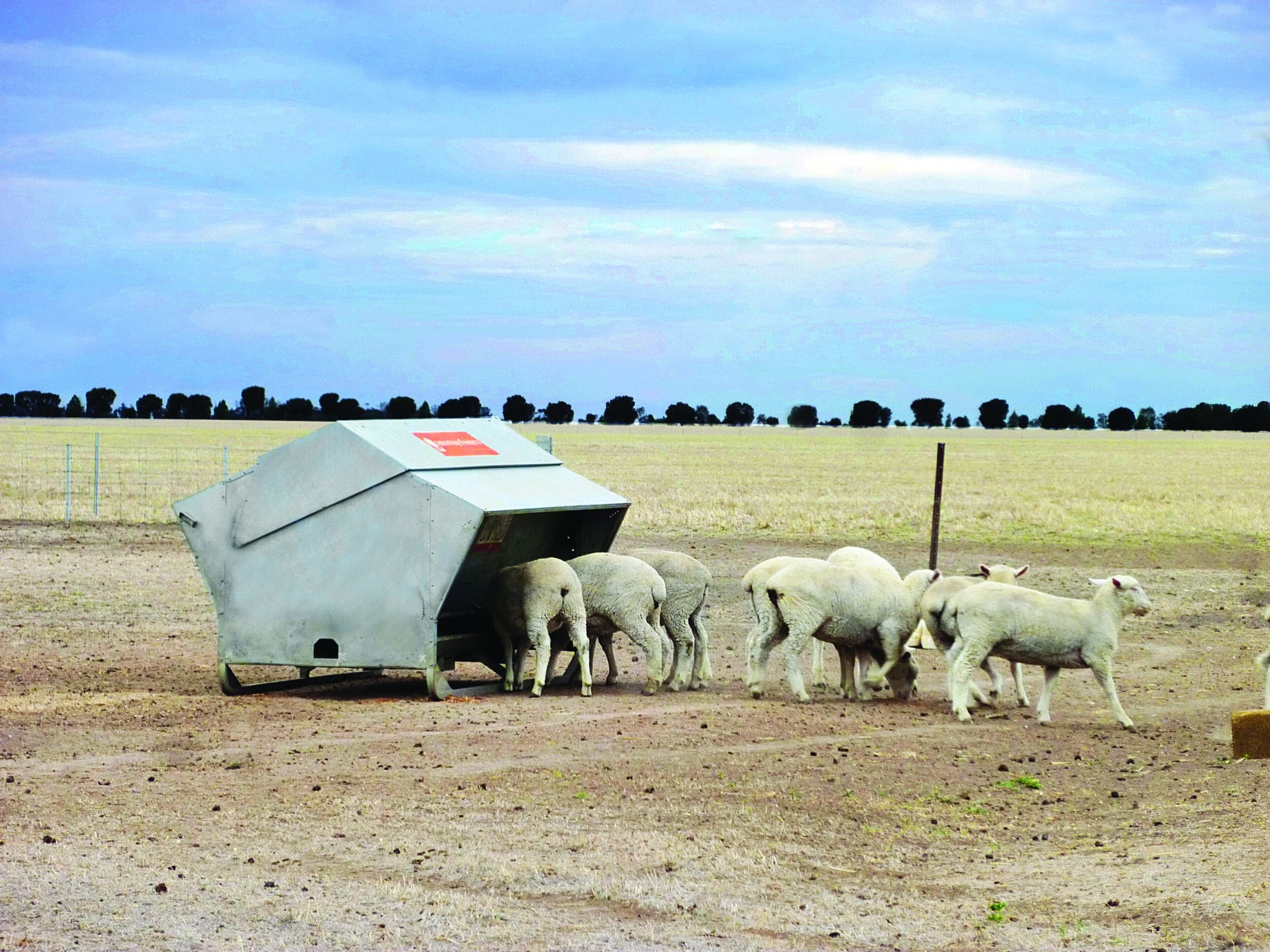
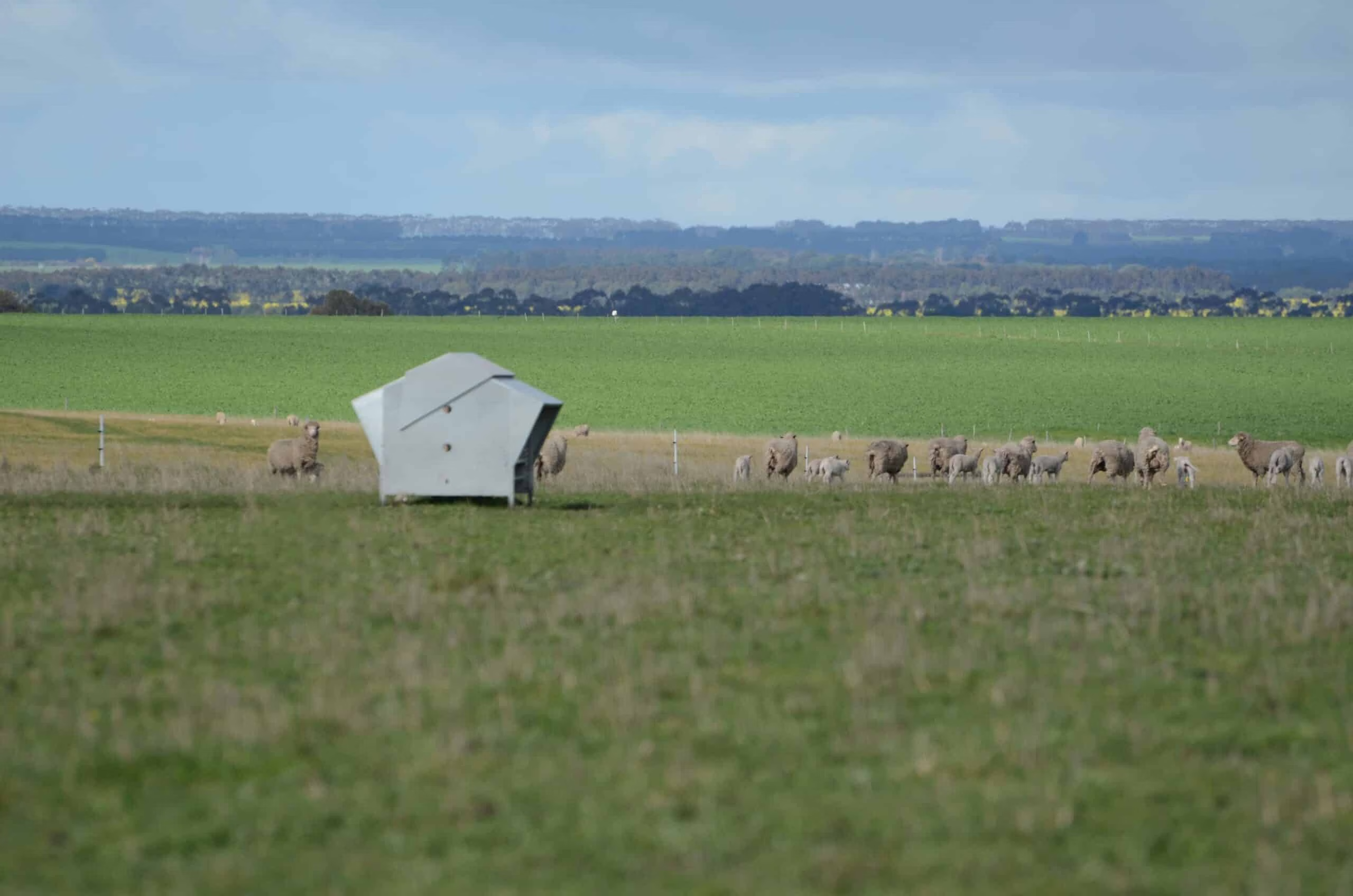
An on-farm trial found that mobs of twin bearing Dohne ewes supplemented in late pregnancy and into lambing were able to rear more lambs/Ha.
The ewes trained their lambs to creep feed and they had higher growth rates.
The ewes that were supplement fed ate significantly less pasture which provides the potential to increase the winter stocking rate by more than 50%.
There are a number of challenges facing profitable lamb production farms. These include:
1.Farms (especially mixed grazing and cereal farms) have their biggest deficiency in pasture availability and livestock consumption when ewes are in late pregnancy and early lactation. If stocking rates are increased during this period (based on lambs growing efficiently), the farm can often sustain this higher stocking rate for the remainder of the year. Stocking rates can be increased by supplementing stock with little and often amounts of starch based feeds as microbe populations increase and ensure high pasture utilisation. The stocking density of the Advantage Feeders (AF) groups within this trial is 8% higher than the control groups. Several other trials have shown a 50% higher stocking rate can be achieved.
2.Supplement can be reduced in a number of areas:
a)Feeding little and often provides an environment where microbes thrive. Trials have shown that the feed required to supplement mature stock can be reduced by more than 30%. As the control group had ceased being supplemented by the time the trial started, this doesn’t affect the profitability of this trial period.
b)Most enterprises have a target weight for their weaners based on reaching a particular weight for a premium market or to coincide with the finish of the spring pasture flush. Creep feeding achieves higher growth rates which allow the pregnancy period to be delayed.
c)Weaning coincides with the ability of a lamb to be self-reliant on pasture. Creep feeding brings this forward approximately 4 weeks meaning that lambs can be weaned off their lambs early – usually during the spring pasture flush. This provides the ewe more time on high quality pasture to raise their condition before mating, reducing the amount of supplement feeding required in early and mid-pregnancy.
The majority of supplement costs on a farm is from feeding pregnant ewes before there is adequate pasture. If mating is delayed by 3 weeks, this saves approximately $3/ewe.
3.Supplementing ewes with starch at lambing thins its colostrum increasing the chance of its lamb receiving enough to survive past the first few days of its life.
4.Supplementing ewes through lambing makes them run away from their lambs to receive their feed, leading to mis-mothering. It is often the lesser of two evils to choose not to supplement them. The control mob in this trial has not been supplemented so mismothering isn’t applicable.
5.Lamb growth rates are increased in three main ways:
a)Supplementing ewes post lambing increases milk supply.
b)Creep feeding lambs from 2-3 weeks of age starts the transition of their rumen so they can start consuming and converting pasture.
c)Lambs that have been creep fed have a developed rumen by eight weeks of age. Feeding a controlled ration after this period will provide an environment to maximise growth off pasture.
The combination of these can often lead of the latter two benefits can produce a feed conversion of 3:1.
6.Weaned lambs that have been creep fed can transition through weaning better because they are less reliant on their mothers to feed.
7.Ewe lamb conception is heavily reliant on the mating weight of ewe lambs. Higher growth rates of ewe lambs before weaning increases their conception
| Advantage Feeders groups | Control groups | |
|---|---|---|
| Number of groups | 2 | 2 |
| Quantity in each group | 84 | 78 |
| Ewes/Ha | 8.4 | 7.8 |
| Ewe age | 2-7 year old | 2-7 year old |
| Foetuses | Twins | Twins |
| Mean lambing date | 1/08/2015 | 1/08/2015 |
| Weaning date | 15/10/2015 | 15/11/2015 |
| Ewe supplement: 5 weeks pre-lambing to 5 weeks post lambing |
300g/day of wheat | No feed |
| Lamb supplementation: from 2 weeks of age |
159g/day of pellets/wheat | No feed |
| Weaner supplementation: until the control group is weaned |
200g/day of pellets/wheat | No feed |
Note: at docking, both Advantage Feeders groups are to be combined and run together. The same happens for the Control Groups.
1. Calves per feed input which was increased from 25 calves to the commercial application of 50 calves per feeder
2. The outputs used the calculator from www.advantagefeeders.com.au/calculating-return-on-investment
3. The outputs includes the costs associated with filling, monitoring and depreciation.
Comments from the trial operator.
Although the pasture conditions at were poor, the weather was better on average for lambing. There were very few cold days and it didn’t get wet and boggy. This is a big help when you have feeders in the paddock.
We had never creep fed before however we found training the lamb to the system was very easy by putting milk powder in the troughs and on the feed access area. The lambs really were attracted to this.
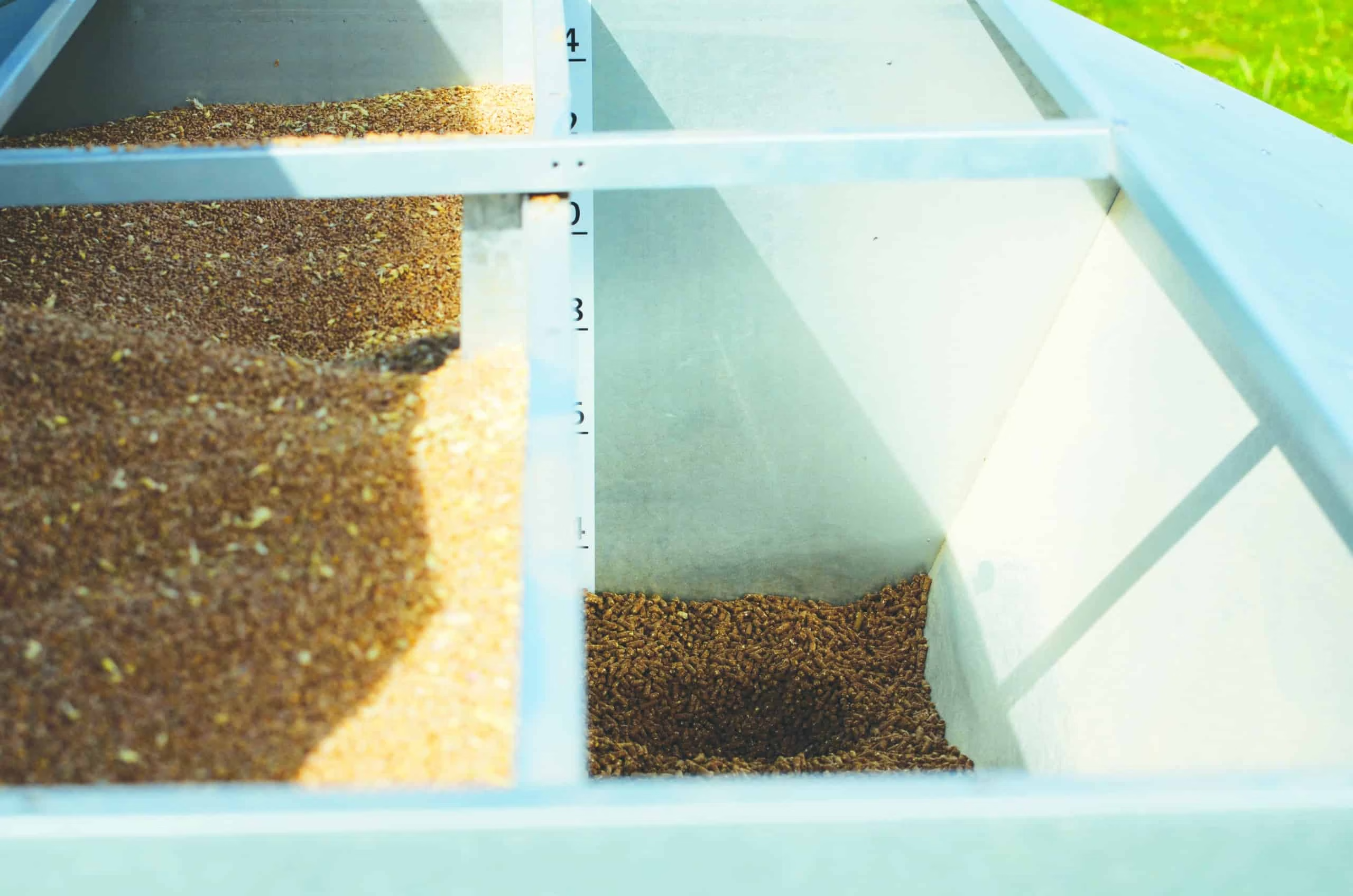
We found that feeding pellets to young lambs difficult. They tended to clog due to the combination to the wet and humid time of year and the low intake of the lambs. The clogging inhibited the intake of the lambs which would have reduced the benefits of early rumen development.
Part way through the trial, we changed to feed the lambs a 50/50 wheat and pellets mix. That flowed much better and lowered the food cost; It would be rare to see any clogging with that mix.
In the future, we will focus more on feeding the ewes to condition score. Keeping the ewes in better condition will return an increase in lamb survival and milk production.
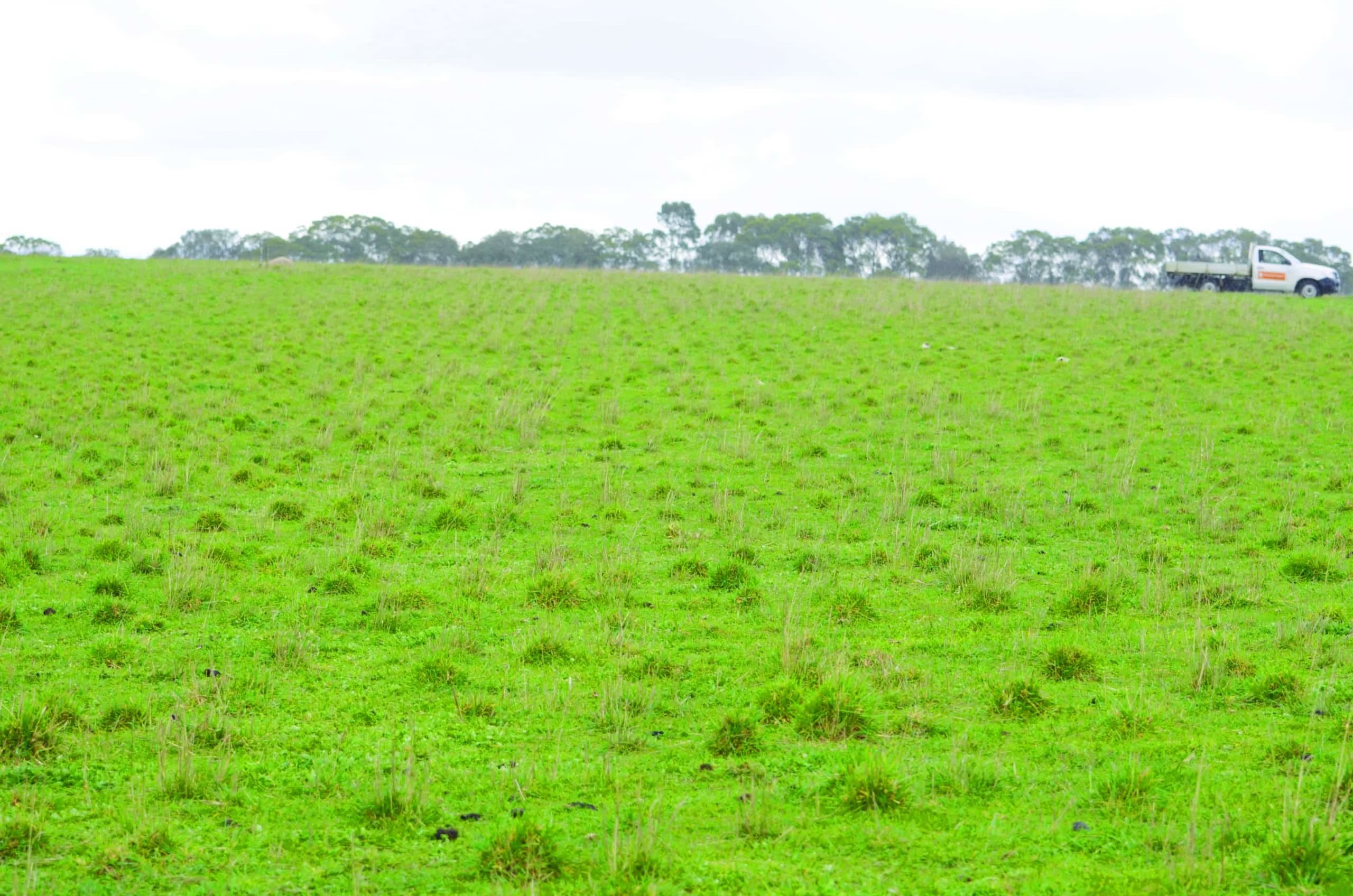
The 2015 growing season in Wickliffe had 278ml in the 8 months from the start of April until the end of November. The long term average rainfall during these months is 450ml, as extra 62% that the rainfall in 2015. The annual rainfall was less that the 5th percentile. This affected the trial in a number of ways:
| FEEDER 1 | FEEDER 2 | CONTROL 1 | CONTROL 2 | |
| Ewe starting weight: 25/6/15 (kg) | 54.1 | 53.7 | ||
| Ewe weaning weight: 1/11/15 (kg) | 56.9 | 54.6 | ||
| Increase in ewe weight (kg) | 2.8 | 0.8 | ||
| Ewes/Ha | 8.40 | 8.40 | 7.80 | 7.80 |
| Starting pasture FOO (kgDM/Ha) | 900 | 1300 | 1250 | 1200 |
| Finishing pasture FOO: 8/7/15 (kgDM/Ha) | 800 | 1200 | 600 | 800 |
| Change in pasture FOO: 4/9/15 (kgDM/Ha) | -100 | -100 | -650 | -400 |
| Average change in pasture FOO (kgDM/Ha) | -100 | -525 | ||
| Consumption of a ewe in late pregnancy: 3.5% of body weight, 10% pasture waste |
2.08 | 2.07 | ||
| Additional ewes/Ha run to reduce FOO by 425kgDM/Ha (525-100) over 58 days |
3.52 | 0.0 | ||
| Total ewes/Ha for equal pasture FOO | 11.92 | 7.80 | ||
| Lamb weaned/Ha | 13.0 | 10.7 | 11.2 | 11.2 |
| Average lambs weaned/Ha | 11.9 | 11.2 | ||
| Average weaning % | 141.1% | 143.6% | ||
| Average ewe lamb DWG (grams)* | 203 | 186 | ||
| Average wether lamb DWG (grams)* | 227 | 221 | ||
| Lamb DWG: equal sex (grams) | 215 | 203 | ||
| Ewe wheat cost/Ha ($250/tonne) | $43.75 | $ – | ||
| Lamb wheat cost/Ha ($250/tonne) | $8.75 | $ – | ||
| Lamb pellet cost/Ha ($360/tonne) | $12.60 | $ – | ||
| Depreciation cost/Ha** | $31.32 | $ – | ||
| Filling cost/Ha ($20/tonne) | $5.19 | $ – | ||
| TOTAL ADDITIONAL COSTS/HA | $101.61 | $ – | ||
| Weaning weight: 105 days* | 26.57 | 25.36 | ||
| TOTAL ADDITIONAL INCOME/HA: Based on 11.92 ewes/Ha ($2.5/kgLW) |
$1116.95 | $710.18 | ||
| TOTAL ADDITIONAL PROFIT/HA | $1015.34 | $710.18 | ||
* Assume a birth weight of 4.0kg.
** This is calculated by multiplying the depreciation rate of 15% by the investment of $2088 for one NGF1800 with Creep Panels.
Note: this doesn’t take into account the benefit of the higher ewe weaning weight being an average of 2kg/head higher. If each kg of body weight gain requires 8kg of pellets, 2kg of body weight is an additional saving of$5.76/ewe.
It is common within the industry for weaning rates to vary within mobs and from year to year, despite having similar conditions. The results in the four groups in this trial vary from 127% to 155%. Over a large sample size of results, an increase weaning result of 10% could be average due to the increase colostrum and milk supply the ewe has at and after lambing. This would increase the profit/Ha by more than $100/Ha.
The lack of growing season rainfall forced the trial to be adjusted. These items are also explained in the Involuntary adjustments to the trial “section.
From the results in the experiment the recommendation is to increase winter stocking by 50% while continuing supplement feeding during late pregnancy and into lambing.
We conduct on-farm trials to test and demonstrate the effectiveness of our products. Each trial provides practical, evidence-based insights that guide our work and support informed decision-making.
Advantage Feeders was developed in Australia and is now used by livestock producers throughout the United States and around the world.
With a head office in Carthage, Missouri, a warehouse in Paden, Oklahoma, and a network of strategically located distributors, Advantage Feeders products are available across the USA.
Our range includes controlled grain and pellet feeders for cattle, sheep and goats, along with creep-feeding and hay-feeding solutions designed to help producers improve feed efficiency, pasture utilization and livestock performance.
Advancing Ruminant Production
Help livestock farmers double meat production with the same level of inputs
Through continual research and development, we strive to provide livestock farmers with the world’s best controlled feeding products, knowledge and systems that allow them to achieve the highest return on investment